








NCAA scholarship: everything to know at 17
Studying in the United States while playing football at a high level, with a scholarship funding both. It's possible, and you prepare for it from age 17
At 17, the question of professional football often collides with the question of studies. The American university system offers a third path that many French families overlook: continuing to play at a high level while earning a recognized degree, all funded by a sports scholarship. Here's what you need to understand before committing to it.
The NCAA, in two minutes
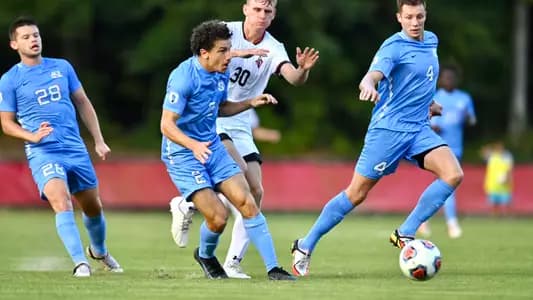
In the United States, college sport is structured and competitive. The NCAA governs university competitions, with facilities, professional coaches and matches followed by scouts. Playing in the NCAA means competing in a demanding environment, comparable to an academy, while following a full academic program.
The sports scholarship is the mechanism that makes all this accessible. A university can fund all or part of the tuition and living costs of an athlete it wants to recruit. For a family, it's the chance to turn a sometimes prohibitive cost into a structured investment.
You have to understand the American logic to grasp the opportunity. A university invests in its sports teams because they're part of its identity and its prestige. Recruiting a good foreign player strengthens a team and draws attention to the institution. The scholarship is therefore not a favor: it's an exchange. The athlete brings his level, the university provides the means to study and to play. Understanding this balance helps you approach the process with confidence.
The dual project: sport and study, without choosing
This is the central argument, and the most reassuring for a parent. The American model refuses to separate the athlete from the student. You play, you train, but you also follow a real degree program.
If the professional career materializes, the player will have competed at a high level. If it doesn't, he'll come out with a recognized degree and fluent English. For Karim, the typical investing parent, this dual outcome is what sets the American path apart from a sunk-cost gamble.
Eligibility: what you need to validate
A scholarship isn't earned on level of play alone. Eligibility rests on three pillars you need to anticipate.
Academic level: a solid academic record, consistent grades, a baccalaureate in sight.
English: a certified level is generally required to enter an American program.
Sporting level: match videos, statistics, a profile that American coaches can assess remotely.
The timeline, step by step
The calendar counts as much as the talent. Too many families start too late. Here's the sequence to follow when you begin at 17.
At 16-17: set out the project, assess the player's real level and his academic record.
Put together the athletic file: recent match videos, statistics, honors, a structured profile.
Prepare for and take the English certification required by the universities.
Target universities consistent with the sporting level and the study plan, then start making contact with the coaches.
Negotiate the scholarship offer, finalize admission and prepare for departure for the American academic year.
What UST handles for you
University Sports Talents, FSE's USA entity, supports high-school graduates aged 16 to 24 across this entire journey. The network relies on more than 1,200 partner universities, including leading institutions such as Harvard, Stanford and Berkeley, and has already supported more than 500 student-athletes.
In practice, UST handles building the file, connecting with coaches, language preparation and scholarship negotiation. Between 2017 and 2019, before the COVID period, 200 student-athletes a year were placed in American universities. The emblematic success of this channel remains Wilfried Nyamsi, crowned NAIA champion in 2018 and named best defender of the All-American Team.
What sets structured support apart from going it alone is knowledge of the field. Targeting the right university, speaking the language of American coaches, presenting a file in the expected format, meeting every administrative deadline: these are all points where a family on its own loses precious time, sometimes an entire year. UST's role is to avoid these pitfalls and to position the player where his profile genuinely has a chance of being chosen.
One question always comes up among parents: what if football doesn't work out once over there? That's exactly where the American model reassures. Unlike a trial at a European club, where sporting failure often means back to square one, the student-athlete in the United States continues his studies whatever happens. The degree carries on, the English consolidates, and the network builds. Sport is the vehicle, but it isn't the only destination.
An American project isn't improvised, but it is built. At 17, you're in exactly the right window to launch it. The sooner the file is set out, the broader the range of accessible universities and the better the scholarship terms you can negotiate.
Want to know if your file is eligible? Discover UST's USA scholarship program and study in the United States while playing in the NCAA.
Keep reading
The U.S. university application file
A sports scholarship isn't won with your legs alone. The academic file — transcripts, tests, eligibility — decides as much as your video
The mistakes that cost a U.S. scholarship
Every year, good-level players miss out on a US scholarship for reasons that have nothing to do with football. Here are the traps, and how to get around them
First contact with a U.S. coach
An NCAA coach receives hundreds of emails per season. Here's how to write the one he'll open, and prepare the conversation that can fund your studies
Take the next step
BE SEEN.
GET RECRUITED.
Advice is good. The pitch is better. Play in front of scouts from 40+ pro clubs at an FSE tryout.